
ON (IN)VISIBILITY
In The Internet-Enabled Ether
INVISIBILITY
OBSFUCATION
ALGORITHMIC LOGIC
AUTOMATION
SPECTRALITY
It no longer makes sense for artists to attempt to come to terms with "internet culture," because now "internet culture" is increasingly just "culture." […] The term "Post-Internet" positioned the artistic creation process "after" or structurally outside of the internet, while acknowledging that the artist was a compulsive participant in internet culture. […] The outside is not presumed to exist.
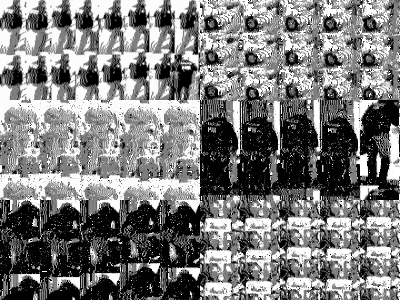
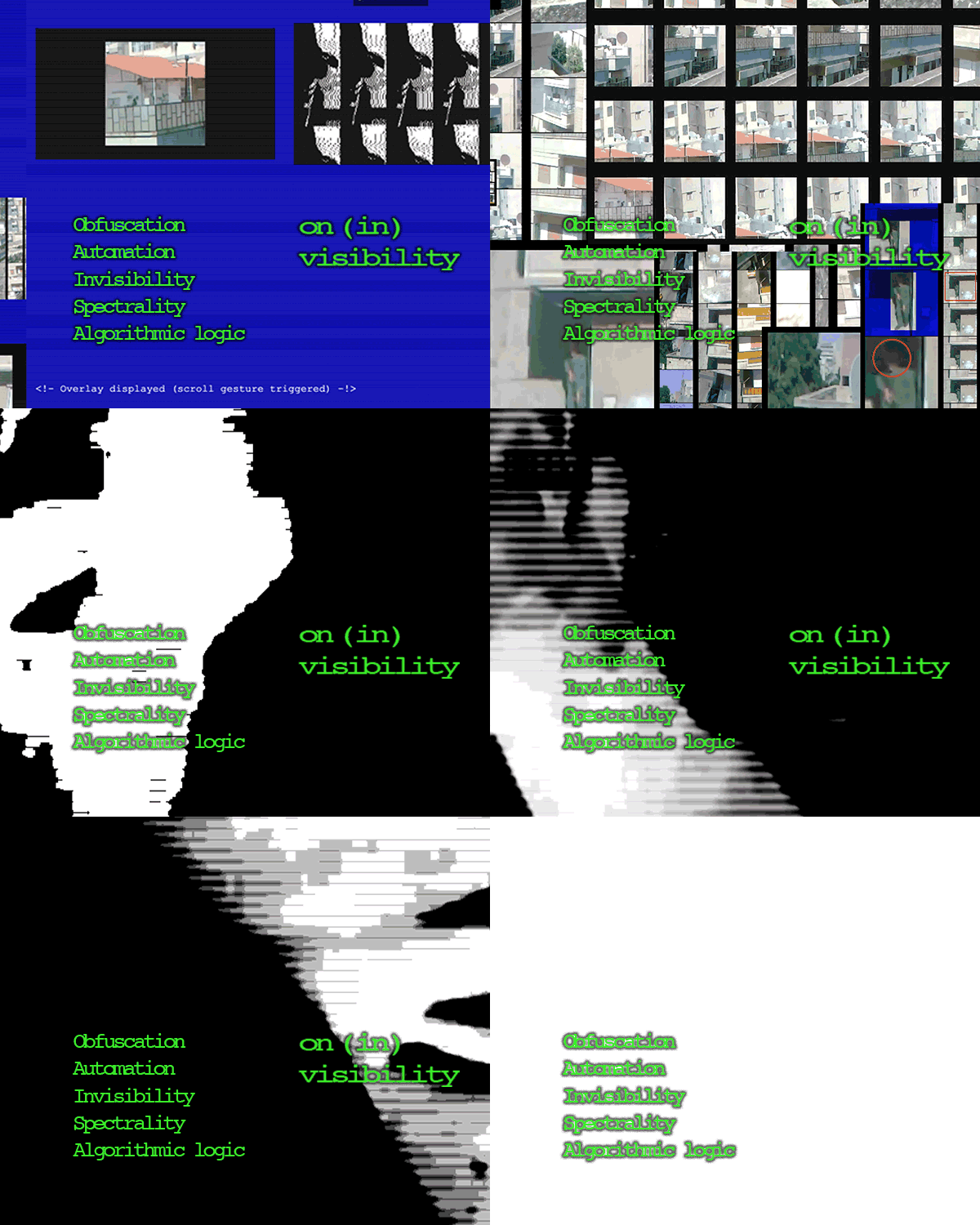
On (in)visibility addresses involuntary invisibility in contemporary digital networks. It explores how images, data or online presences are systematically excluded from human perception, not by choice, but by force of algorithms. This invisibility does not represent an absence, but a silent, technical and structural functioning of the image in the age of automation.
Invisibility, in this context, is twofold: voluntary, as a strategy of resistance (obfuscation, concealment, performative disappearance); and involuntary, as a condition imposed by algorithmic systems, automated censorship or overproduction. It's a spectral presence, an image without a body, a trace without an origin, data without interpretation. The invisible is not an absence, but a mode of operation: indexed, archived, discarded.
The project does not seek to restore what has been erased, but to question the criteria that define what deserves to be shown. It aims to reintroduce into the field of experience what algorithmic logic has removed from the visible. At a time when visibility is a currency of value and surveillance, invisibility can be both an imposed condition and a political gesture. The project thus suggests that observing the erased is also a way of resisting. And to remember that, even without being seen, something is still happening.
It no longer makes sense for artists to attempt to come to terms with "internet culture," because now "internet culture" is increasingly just "culture." […] The term "Post-Internet" positioned the artistic creation process "after" or structurally outside of the internet, while acknowledging that the artist was a compulsive participant in internet culture. […] The outside is not presumed to exist.
Michael Connor, What's Postinternet Got to Do with Net Art?, 2013
INVISIBILITY
OBFUSCATION
ALGORITHMIC LOGIC
AUTOMATION
SPECTRALITY
On (in)visibility addresses involuntary invisibility in contemporary digital networks. It explores how images, data or online presences are systematically excluded from human perception, not by choice, but by force of algorithms. This invisibility does not represent an absence, but a silent, technical and structural functioning of the image in the age of automation.
Invisibility, in this context, is twofold: voluntary, as a strategy of resistance (obfuscation, concealment, performative disappearance); and involuntary, as a condition imposed by algorithmic systems, automated censorship or overproduction. It's a spectral presence, an image without a body, a trace without an origin, data without interpretation. The invisible is not an absence, but a mode of operation: indexed, archived, discarded.
The project does not seek to restore what has been erased, but to question the criteria that define what deserves to be shown. It aims to reintroduce into the field of experience what algorithmic logic has removed from the visible. At a time when visibility is a currency of value and surveillance, invisibility can be both an imposed condition and a political gesture. The project thus suggests that observing the erased is also a way of resisting. And to remember that, even without being seen, something is still happening.
Mariana Martins