About
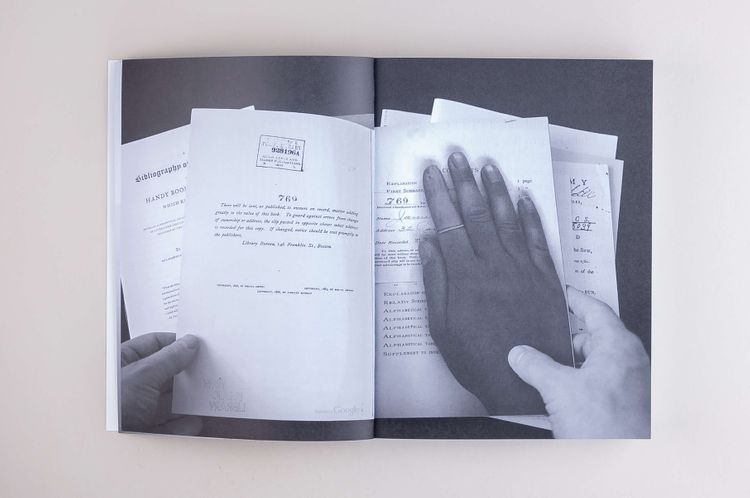
This Page is Loading/This Page is Printed proposes a critical reflection on the coexistence and interdependence between print and digital media, evoking Alessandro Ludovico's ideas on publishing in the post-digital era. More specifically, it addresses the idea that the digital medium does not replace, but rather redefines, the printed medium, exploring the fusion and inversion of visual and functional characteristics, and revealing tensions and contaminations between media. The project consists of a hybrid editorial object, a printed publication that simulates the characteristics of a digital interface, challenging reading conventions and subverting the functional logic of each medium. It proposes a reflection on contemporary ways of reading, consuming and valuing information, questioning what it means to ‘browse’ a book or ‘flip through’ a website. While the printed object appropriates elements from the digital medium, the website inverts this logic by evoking and manipulating the materiality of the printed medium.
More than merely evoking aesthetics, this project aims to provoke reflection on how graphic languages shape our experience of reading and perceiving information, crossing the design of print and digital media, and questioning the interface and interaction with reading artifacts. In this way, it contributes to a discussion on the hybridization of media in contemporary visual culture.
Academic Project by Ema Francisco
Project II and Laboratory II, Teachers: Luísa Ribas, Frederico Duarte, Pedro Ângelo; Masters in
Communication Design, 2024-25; Faculty of Fine Arts, University of Lisbon.
This Page Is Loading
____
The timeless ‘interface’ of the printed page (including its classic ‘golden ratio’ dimensions and ‘portrait’ or vertical orientation) has finally been adopted by digital publishing; on the other hand, printed products increasingly attempt to incorporate ‘digital’ characteristics – such as updateability and searchability.1
____
Nevertheless, the overblown tone in which the death of the paper medium is currently being announced, should give us reason to pause and consider more closely the qualities and drawbacks of the currently emerging digital alternatives – and also how print, instead of disappearing, may instead adapt and evolve. 2
In our present digital era, the ‘death of paper’ has become a plausible concept, widely expected to materialise sooner or later. The ‘digitisation of everything’ explicitly threatens to supplant every single ‘old’ medium (anything carrying content in one way or another), while claiming to add new qualities, supposedly essential for the contemporary world: being mobile, searchable, editable, perhaps shareable.3
The printed page,
_______the oldest medium of them all,
____________seems to be the last scheduled
________to undergo
_________this evolutionary process.4
____
The contrast between paper and pixel is in the end a love/hate relationship. Paper loves the online updating speed, the infinite space for storage and the powerful tools for searching the content through keywords. Pixels love the stability of paper content, how it's reliable in delivering it on demand, and its greater ease in reading. But, they are supposed to hate each other because they'd be seen in fierce competition.5
For the book or print is far from dead… it is just morphing into something different.
6